By [email protected] — Charting the depths of expertise
Ultrapure Water (UPW) cleaning of cleanroom wipes does more than simply remove ions and non-volatile residues (NVR); it causes the wipes to undergo structural relaxation and changes in surface properties. These changes stem directly from physical mechanisms during the cleaning process.
I. Bulking of Fabric and Increased Softness
During cleaning, cleanroom wipes experience intense mechanical friction and fluid shear forces. Friction and pulling between fabrics, and between fabrics and mechanical walls, reduce the tight structure caused by weaving tension and the bonding of residual sizing agents.
Results:
Bulking: The originally tightly bundled filament fibers loosen up. Micro-fibers free themselves from the main yarn body, forming a three-dimensional, loose, fluffy surface structure. Increased Softness: The removal of sizing agents (which act as hardeners) and the reduction of friction between yarns decrease the fabric's bending stiffness. Fibers slide against each other more easily, making the touch significantly softer and fluffier.
II. Reduction in Gloss
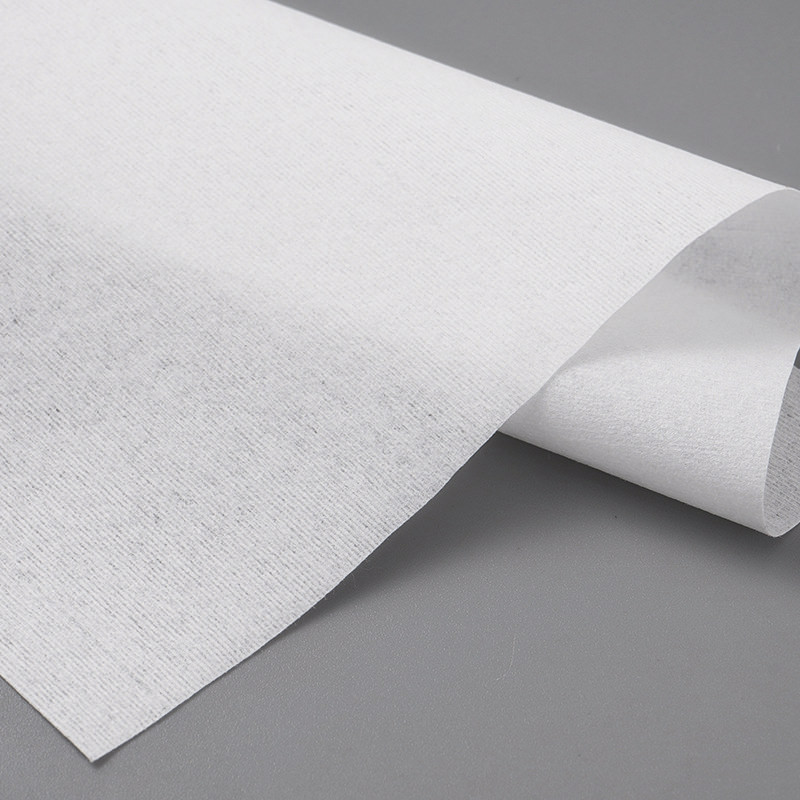
Before cleaning, the surface of the "greige" (raw) fabric is relatively smooth and flat due to the coverage of the sizing film and tight fiber arrangement. When illuminated, it primarily exhibits specular reflection, appearing glossier.
After cleaning, the bulking process mentioned above roughens the microscopic surface morphology.
Results:
The rougher fiber surface causes multiple scattering and diffuse reflection of light in all directions. This directly changes the visual effect of the cleanroom wipe from shiny to matte, resulting in reduced gloss (most noticeable in microfiber cleanroom wipes).
III. Basis Weight Increase of Approx. 5% - 10%
This is a direct result of structural relaxation shrinkage triggered by the cleaning process. Yarns in the greige fabric are under high tensile tension from weaving. Under the influence of hot water (typically 60°C-80°C) and lubrication (water molecules), the yarns attempt to return to a lower-energy, rounder, and more relaxed natural state, causing the fabric to shrink both longitudinally and transversely.
While mass loss is minimal (due to the removal of sizing/NVR/ions), the area shrinkage is far greater than the mass loss, leading to an increase in basis weight (GSM).
This means the number and density of fibers per unit area of the fabric increase, which is beneficial for improving liquid absorption capacity and dust-holding capacity.
Comprehensive Comparison Table
| Indicator | Before Cleaning (Greige) | After Cleaning (Finished) | Core Reason for Change |
|---|---|---|---|
| Surface Gloss | Glossier (Specular Reflection) | Matte, Soft (Diffuse Reflection) | Desizing + Fibrillation roughens surface, scattering light. |
| Hand Feel | Baseline | Soft, Bulky | Caused by bulking and surface roughening. |
| Basis Weight (GSM) | Baseline | Increases 5% - 10% | Caused by area shrinkage. |
| Microstructure | Fibers tightly bonded | Fiber bundles opened, pores increased | Mechanical friction + Fluid shear. |
| Absorbency | Baseline | Better (Stronger capillary effect) | Bulky structure increases specific surface area. |
Summary of changes in cleanroom wipes before and after cleaning:
Morphology: Transforms from stiff, smooth greige cloth to a bulky, soft finished product. Gloss: Surface reflection shifts from specular to diffuse, reducing gloss and presenting a matte appearance. Basis Weight: Due to structural relaxation and shrinkage, basis weight increases by 5%-10%.
Note: This series of changes represents an enhancement in performance, not degradation.