By [email protected] — Charting the depths of expertise
Comparison of 4 Common Cleanroom Wipes
| Material Type | Composition | Gloss | Touch | Structural Features | Applicable Scenarios |
|---|---|---|---|---|---|
| Standard Polyester | 100% Polyester | No obvious reflection, slight luster (matte) | Rough feel, average softness | Coarse fiber texture, visible pores | Basic cleaning with low cleanliness requirements (e.g., equipment housing, general tools). |
| Sub-Microfiber | 100% Polyester | No obvious reflection, slight luster (matte) | Softer, significantly reduced roughness | Finer fibers, less visible pores | Initial cleaning of precision device surfaces; basic optical lens wiping (scratch prevention). |
| Microfiber | 80% Polyester + 20% Nylon | Reflective, good luster | Smooth & delicate, no roughness | Dense structure, extremely fine fibers | High-precision cleaning of electronic screens, optical lenses, etc.; scenarios requiring strong adsorption. |
| High-Density Microfiber | 65% Polyester + 35% Nylon | Lowest reflection, matte/dull | Stiff, less smooth than Microfiber | Paper-like texture, pores invisible to naked eye | Scenarios demanding extreme abrasion resistance, tensile strength, and liquid absorption. |
Material Appearance & Feel Details
Standard Polyester Cleanroom Wipes
Composition: 100% Polyester (Continuous filament). Appearance: Surface has slight reflection and luster (matte). Coarse fiber texture and pore structure are clearly visible to the naked eye. Touch: Distinctly rough feel with average softness. This is due to larger fiber diameter and relatively loose knitting density.
Sub-Microfiber Cleanroom Wipes
Composition: 100% Polyester (Optimized fiber fineness). Specifications: Basis weight typically 90-140g/m². Appearance: Similar to standard polyester with slight reflection and luster (matte), but fibers are finer and surface pores are hard to detect. Touch: Significantly softer. Compared to standard polyester, roughness is greatly reduced, offering a finer touch, though smoothness is still inferior to nylon-blended microfiber.
Microfiber Cleanroom Wipes
Composition: 80% Polyester + 20% Nylon (Composite splitting process). Appearance: Has obvious luster and high reflectivity. Nylon is naturally smoother than polyester, making it visually identifiable. Touch: Extremely smooth. The fiber structure is ultra-fine and dense, feeling delicate with no roughness. Nylon not only optimizes touch but also significantly enhances adsorption.
High-Density Microfiber Cleanroom Wipes
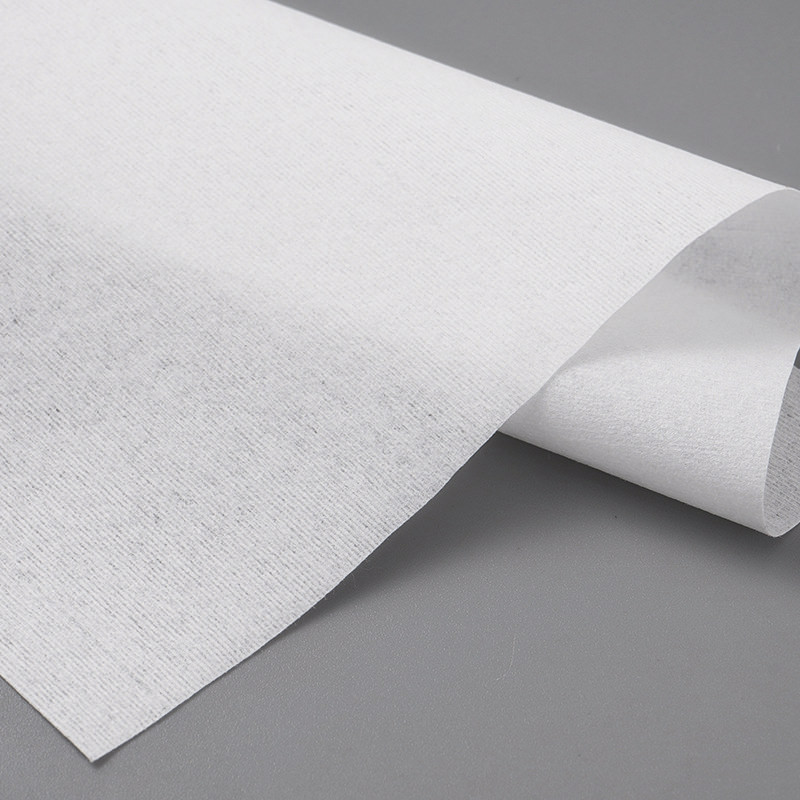
Composition: 65% Polyester + 35% Nylon. Appearance: Extremely high fiber density. Individual yarns and pores are invisible to the naked eye, presenting a seamless, paper-like texture. Touch: Stiff texture with distinct hardness and basically no luster. Despite high nylon content, its special high-density structure makes it less smooth than common microfiber, resembling specialty paper.
Quick Identification Methods (3 Steps)
Follow the logic of "Check Reflection → Feel Texture → Check Stiffness":
Step 1: Check Reflection (Most Intuitive)
Observe under light. If it has obvious luster, high reflectivity, and a smooth touch, it is basically Microfiber (80% Polyester + 20% Nylon). Nylon's properties make it easily identifiable under light.
Step 2: Feel Texture (Distinguish Pure Polyester)
If there is no obvious reflection, distinguish by roughness: Rough feel with visible pores → Standard Polyester. Significantly reduced roughness, soft with invisible pores → Sub-Microfiber.
Step 3: Check Special Texture (Unique to High-Density)
High-Density Microfiber has a unique feel. Its stiff, "paper-like" texture contrasts sharply with other soft fabrics. The difference is obvious and easily recognizable by touch.