By [email protected] — Charting the depths of expertise
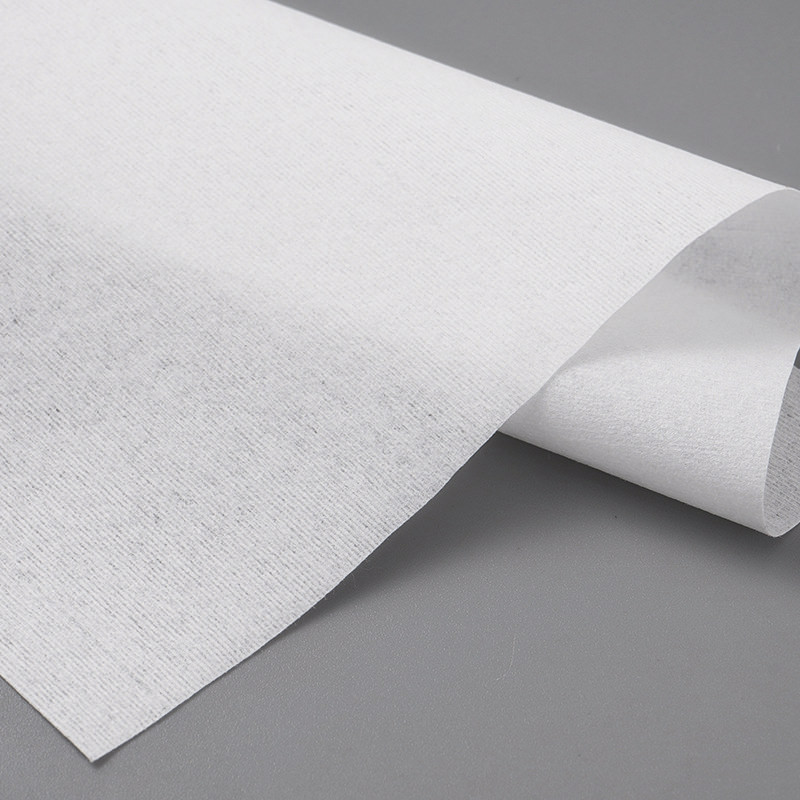
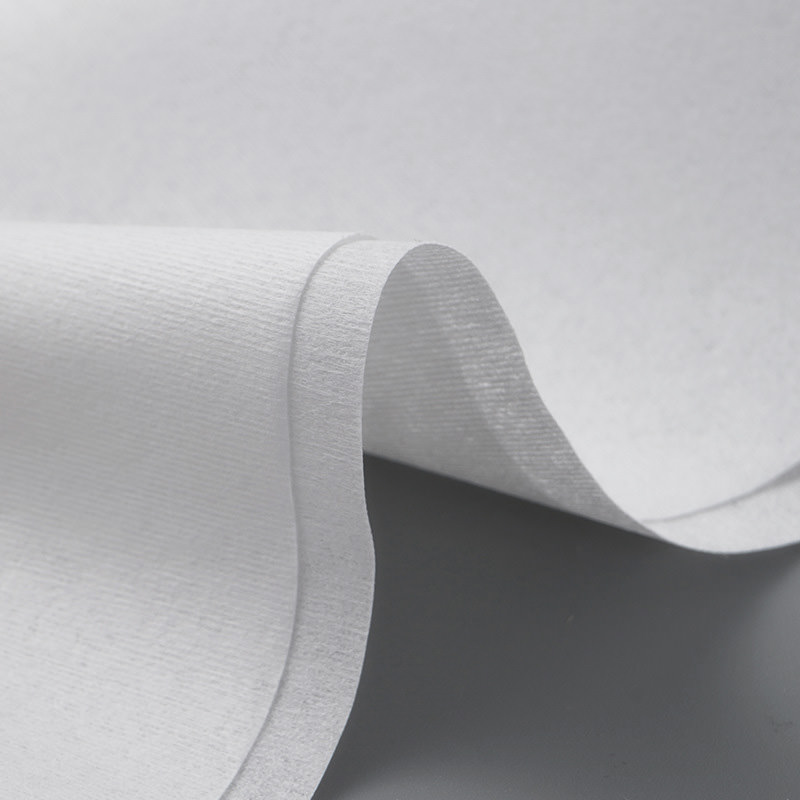
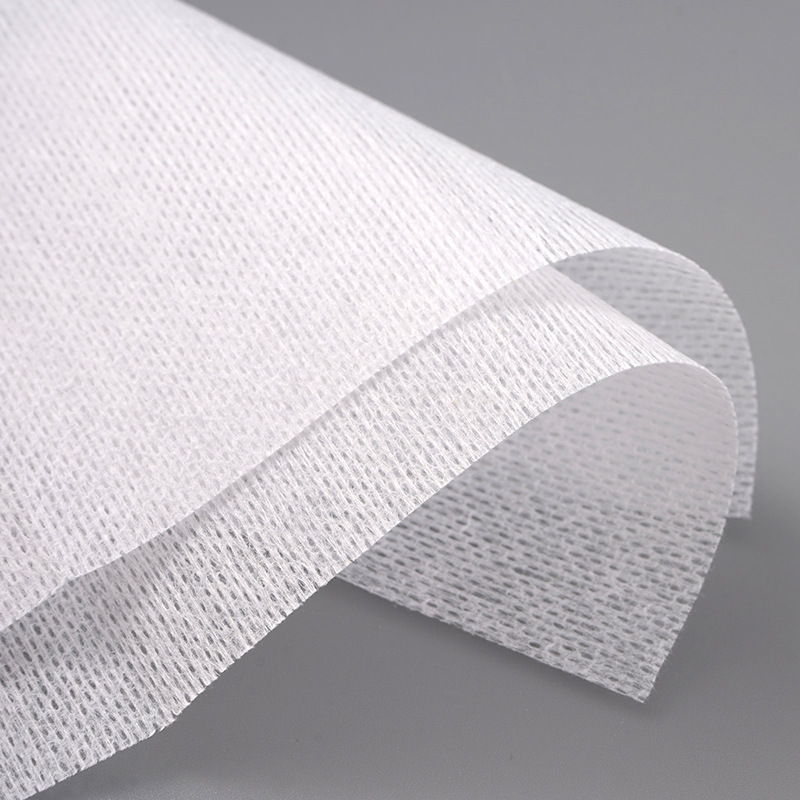
In the SMT electronics manufacturing industry, SMT stencil cleaning rolls are critical consumables for guaranteeing printing quality. If you observe the surface of SMT wipes closely, you will notice neatly arranged vertical lines—known in the industry as "straight grain" or "plain weave."
When seeing these stripes, many may wonder: Is this a manufacturing defect? Is it yarn? Or is it a special embossing process? In fact, these stripes are not quality issues but typical characteristics of high-quality spunlace nonwoven fabric.
I. The Root of Stripes: Physical Entanglement in Spunlace Process
To understand the stripes on cleanroom wipes, one must first understand the core production process—Spunlace, also known as Hydroentanglement.
SMT stencil paper is typically a blend of woodpulp fibers (for absorbency) and polyester staple fibers (for strength). Unlike traditional papermaking that uses chemical glues, the spunlace process utilizes pure physical force. During manufacturing, high-pressure fine water jets (like thousands of tiny "needles") are sprayed from a nozzle onto the laid fiber web.
This high-pressure water flow possesses immense energy. It penetrates the fiber layer, causing intense displacement, twisting, and entanglement among fibers. Through this physical-mechanical "knotting," fibers are firmly bound together to form a nonwoven structure with specific strength. The stripes on the paper are the direct result of this high-pressure water flow interacting with the high-speed equipment.
II. The Core Role: The Mesh Curtain—Both Conveyor and "Mold"
In a spunlace production line, there is a crucial component—the Mesh Curtain (or Forming Wire). Located beneath the fibers, it serves as both a conveyor belt and the "mold" that determines the appearance of the cleanroom wipe.
The mesh curtain performs three functions:
Carrying & Conveying: Supports fluffy, unformed fibers, stabilizing them through the high-pressure water jet zone. Rapid Dewatering: The curtain must be highly water-permeable. After high-pressure water hits the fibers, it must immediately pass through the curtain and be sucked away by the vacuum box below to prevent fibers from washing away. Texture Formation: This is core to stripe generation. High-pressure water forces fibers to embed into or conform to the curtain's surface structure, thereby replicating the curtain's pattern onto the fabric.
Simply put: Straight grains come from plain weave curtains; mesh patterns come from aperture mesh curtains.
III. Formation of Straight Grain (Plain Weave): Unique "Combing Effect"
The most common vertical stripes on SMT stencil paper are created by plain weave curtains moving at high speed.
Although a plain weave curtain is microscopically a grid of interwoven warp and weft wires (for water permeability), its dense structure, combined with high-pressure water and high-speed operation, forms unique straight stripes:
Longitudinal Guidance: The longitudinal wires (warp) in the curtain are taut, acting like rails; transverse wires (weft) have a relatively weaker effect on fibers during high-speed movement. Combing into Lines: When high-pressure water hits the fibers, it cannot penetrate the dense metal wires, so it forces the fibers into the gaps between two longitudinal wires.
Macroscopically, fibers are smoothed and compacted by the water flow along the direction of the curtain's movement, forming a highly directional alignment. This structure endows the nonwoven fabric with excellent longitudinal tensile strength, making it highly resistant to breakage during high-speed roll-to-roll wiping on SMT printers.
IV. Formation of Mesh (Aperture) Pattern: "Pit-Filling Effect"
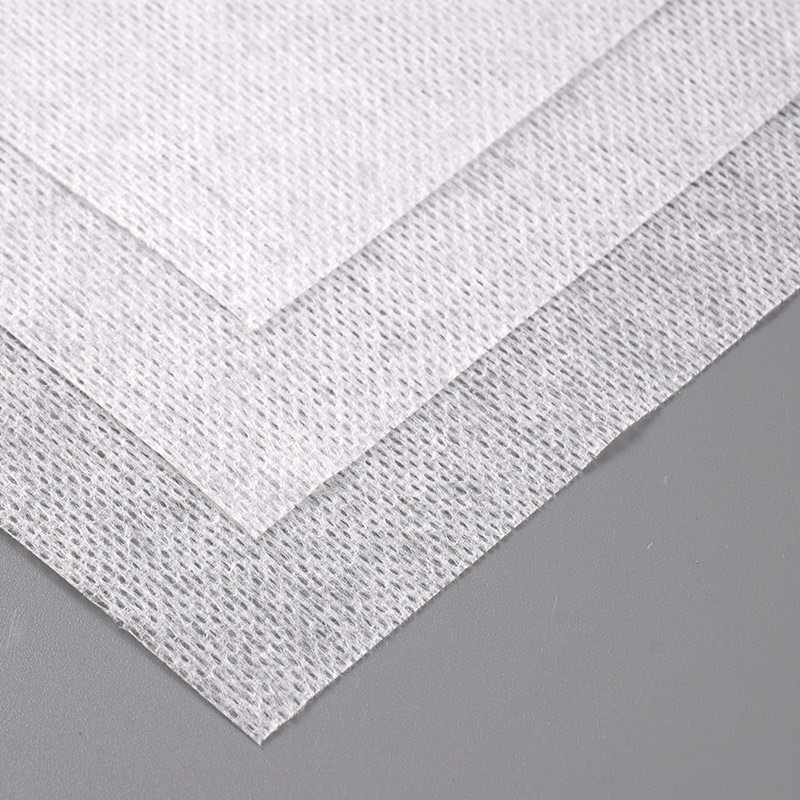
Changing the bottom mesh curtain can completely alter the texture. Using a curtain with thicker wires and larger holes creates a mesh pattern—essentially a "Pit-Filling Effect":
High Point Rebound (Hole Formation): The intersection nodes of warp and weft wires are "high points." When water needles hit here, the flow bounces or slides sideways, washing fibers away and leaving gaps (holes). Low Point Accumulation (Line Formation): The washed-away fibers gather and pile up in the "low points" (pits) in the center of the mesh holes, forming the solid lines of the fabric.
Mesh patterns are essentially created by water "hammering" fibers into the large pits of the curtain. This structure offers better air and water permeability, suitable for wiping scenarios requiring high breathability.
Besides straight and mesh patterns, special texture curtains (like raised dots) can create pearl patterns, demonstrating the high plasticity of the spunlace process.
V. Subtle Relationship: Material, Basis Weight & Stripes
Beyond the curtain style, raw material ratio and basis weight also affect the visual effect of stripes.
SMT cleanroom paper usually employs a composite process of "Carding + Air-laid." Longer polyester fibers are laid into a web by a carding machine to form the skeleton; shorter woodpulp fibers (too short to card) are air-laid onto the polyester web. Finally, the two layers are hydroentangled together. This "Polyester + Woodpulp" hybrid structure ensures both toughness and liquid absorption.
The higher the basis weight of the cleanroom paper, the denser the stripes often appear. This is because the fiber density per unit area is higher, leading to tighter entanglement after spunlacing, resulting in a denser and clearer macroscopic texture.
Conclusion
The stripes on cleanroom wipes are the product of the interaction between the spunlace process, fiber physical properties, and the mechanical structure of the mesh curtain.
Straight grains represent directional fiber alignment and high longitudinal strength, making them the ideal choice for SMT roll-to-roll operations; mesh patterns reflect fiber accumulation and penetration under specific curtains, bringing better breathability.